

Intérieur avec fenêtre
La série Intérieur avec fenêtre de Gabriel Riesnert s’inscrit dans une réflexion sur l’espace domestique en tant que construction mentale autant que physique. En convoquant l’iconographie des intérieurs modernistes — souvent rapprochée de l’héritage d’Edward Hopper — l’artiste ne se situe pas dans une logique de citation, mais dans une exploration du vide et du seuil.
Les intérieurs représentés sont dépourvus de figures humaines, mais saturés d’indices de présence. Le mobilier, disposé avec une rigueur presque scénographique, agit comme une trace : celle d’une absence, d’un usage suspendu. Cette absence ne renvoie pas à une disparition dramatique, mais à un état de retrait, de latence. Elle installe une temporalité étirée, où le regardeur est invité à occuper mentalement l’espace laissé vacant.
La fenêtre constitue le dispositif central de cette série. Elle fonctionne comme un seuil au sens théorique du terme : non pas une limite, mais une zone de passage et de projection. Entièrement transparente, sans reflet ni résistance, elle annule la séparation traditionnelle entre intérieur et extérieur. Le paysage ne se donne pas comme une vue cadrée, mais comme une continuité spatiale, presque immersive. L’intérieur semble se prolonger vers le dehors, tandis que le paysage agit en retour comme une extension psychique de l’espace habité.
Chez L’artiste, le paysage extérieur devient ainsi une projection de l’état intérieur du lieu : calme, stable, silencieux. Les montagnes, l’eau et la végétation ne sont pas descriptives ; elles relèvent d’une construction idéalisée, presque archétypale, qui renforce leur dimension mentale.
Le traitement pictural accentue cette sensation de suspension. Les formes sont simplifiées, les couleurs maîtrisées, la lumière uniforme et sans source identifiable. Le temps semble figé, privé de narration, laissant place à une expérience contemplative. Ce refus de l’événement inscrit les œuvres dans une esthétique de la retenue, où l’émotion naît de la stabilité plutôt que de la tension.
** The English version is at the end of this page.
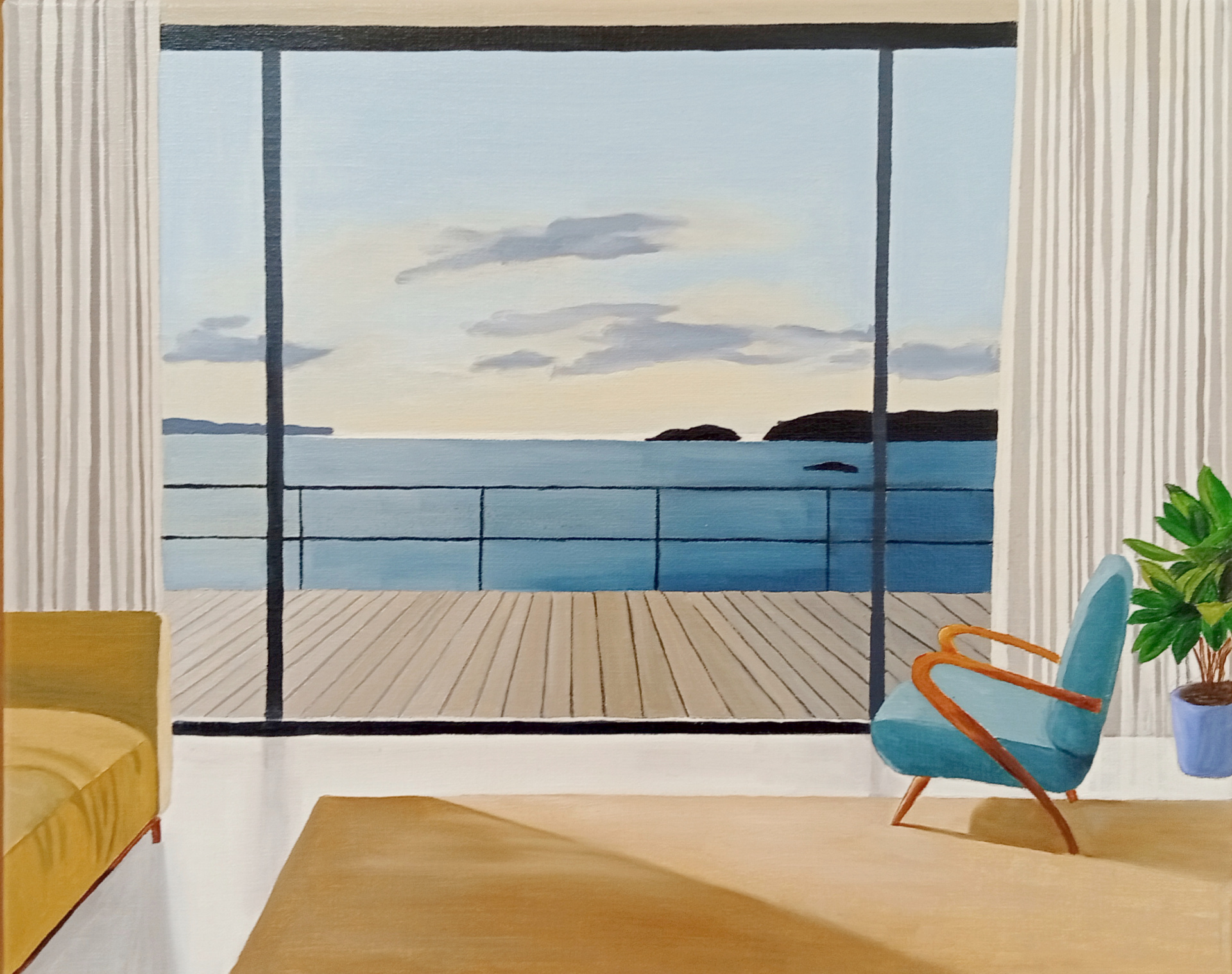
Fenêtre sur mer – Oil painting on Linen, 41×33 cm, 2025
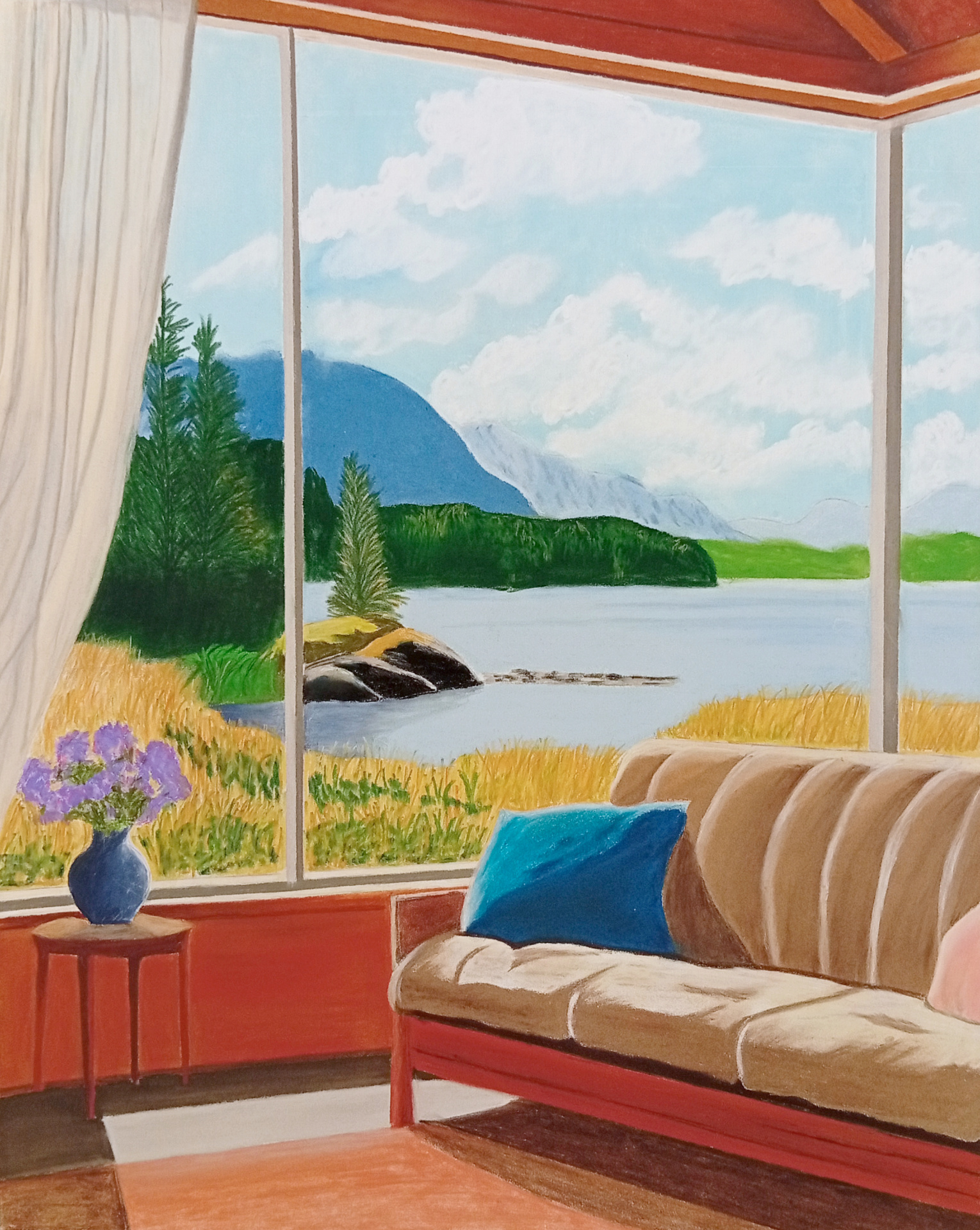
Doux Horizon – Soft Pastel on paper 300g/m², 50 x 40cm, 2025
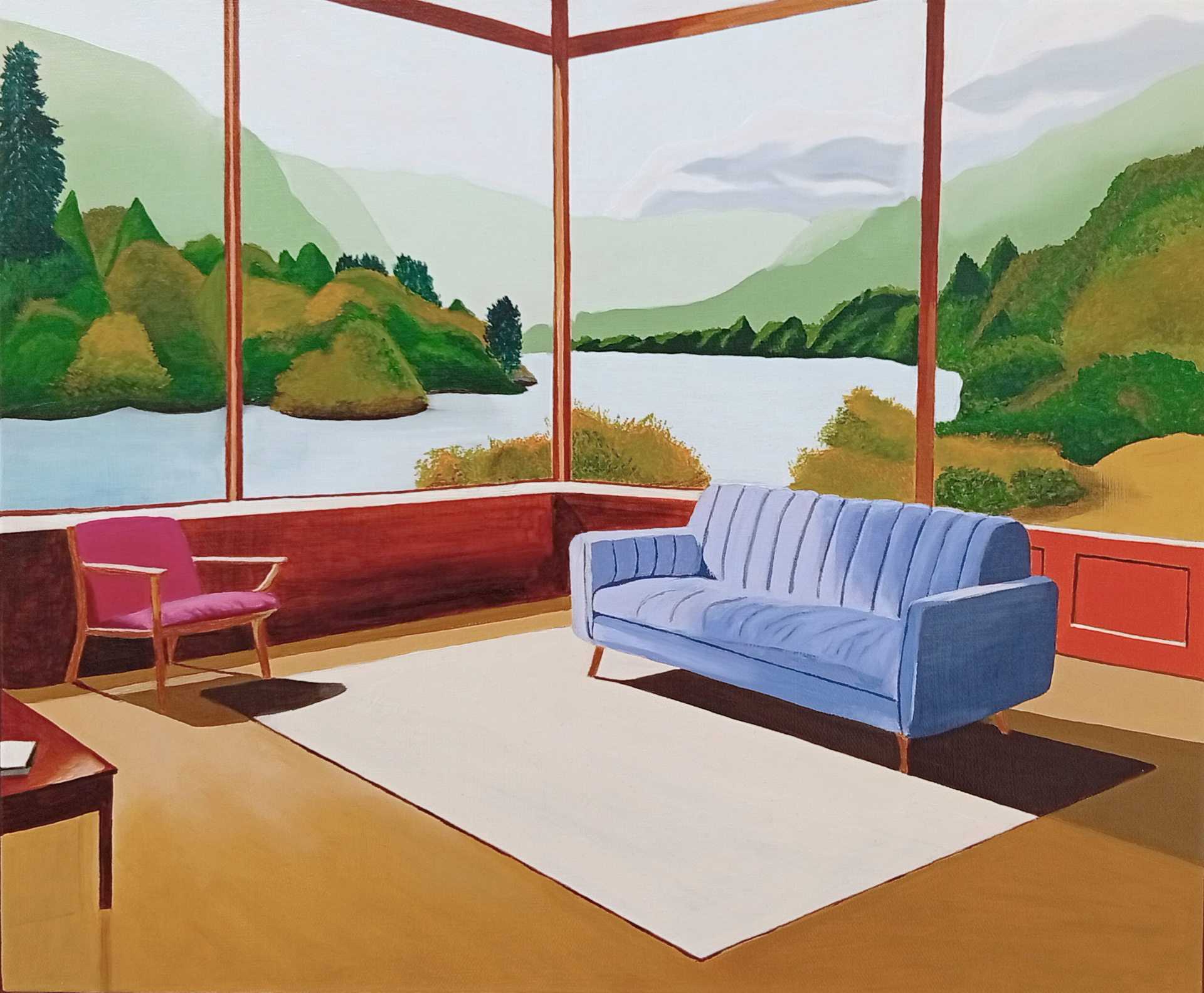
Sans Titre – Oil painting on Linen, 46×38 cm, 2025
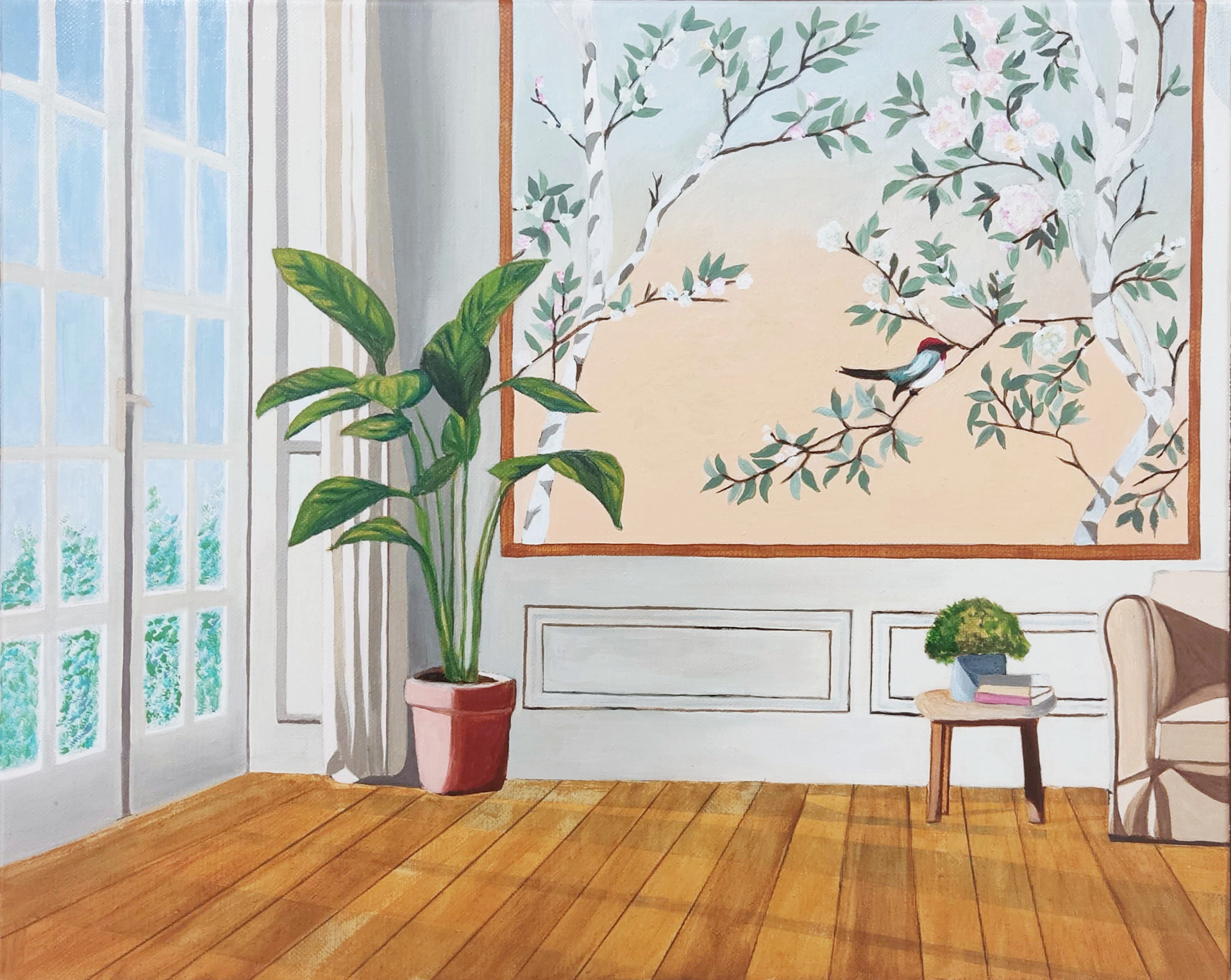
Garden Sounds -Oil Painting on Linen, 41 x 33cm, 2025 – Private Collection
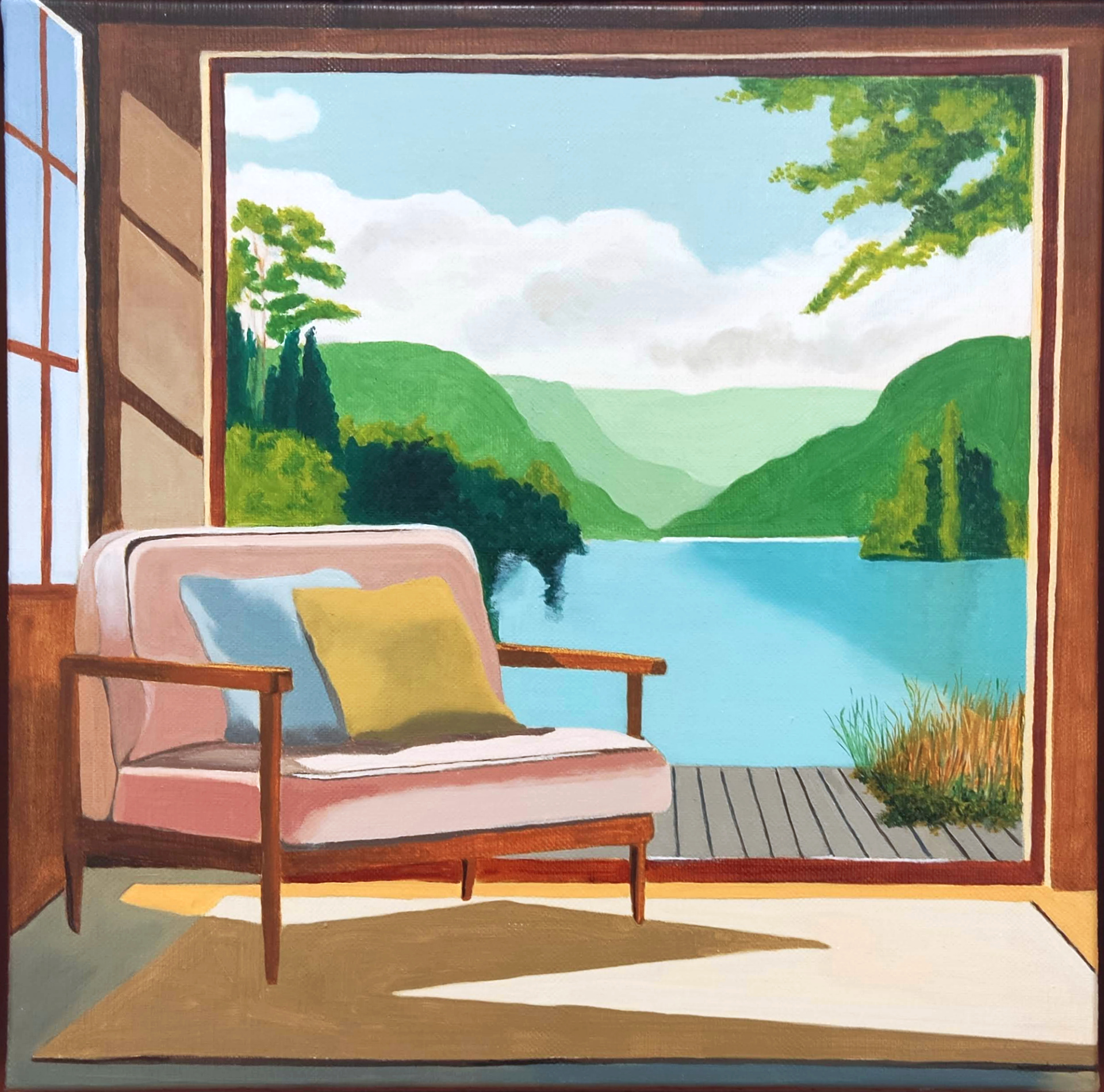
Un autre ciel – Oil Painting on Linen, 30 x 30 cm, 2025 – Private Collection
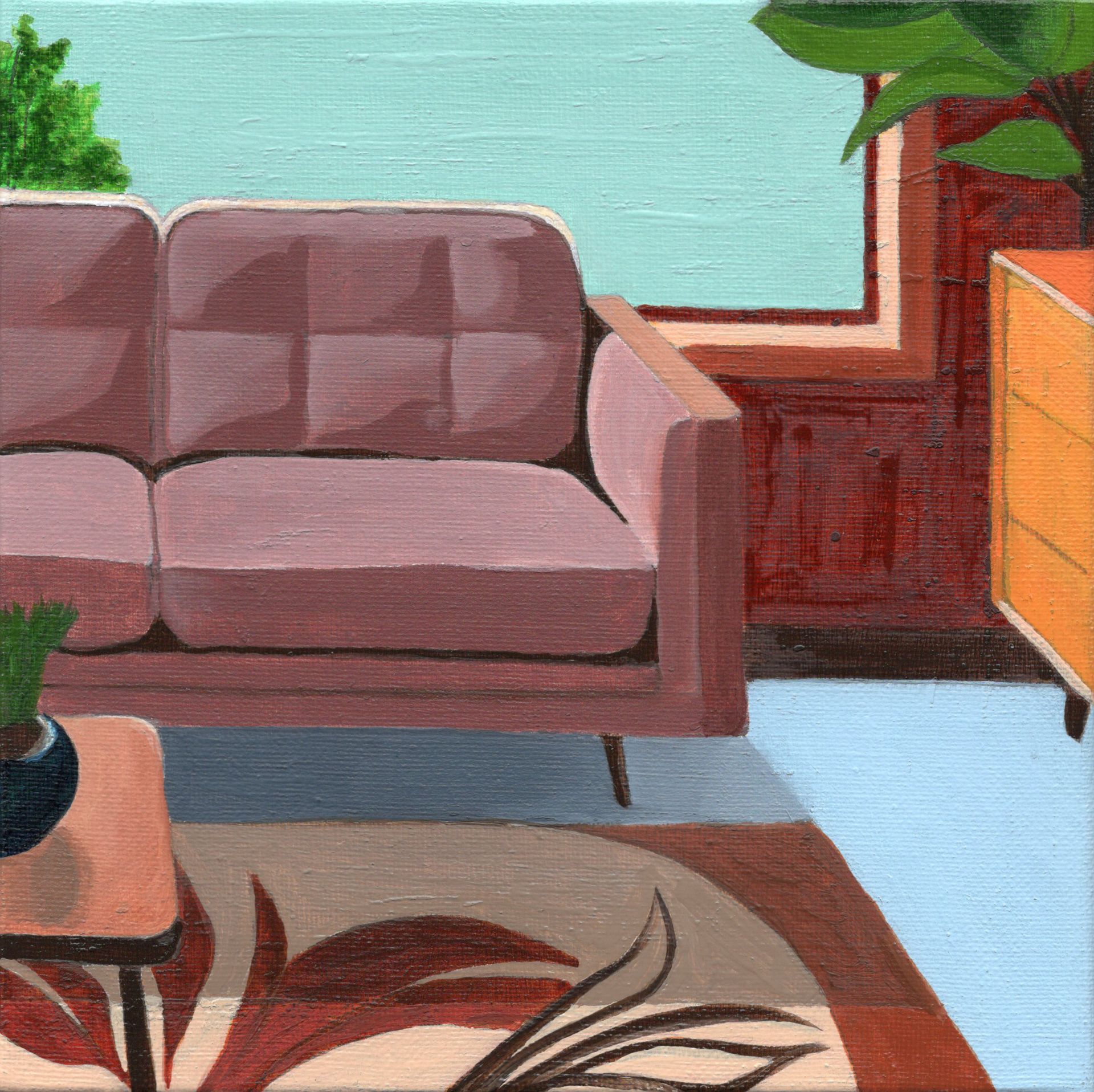
Fenêtre sur lac V9 – Oil Painting on Linen, 20 x 20 cm, 2024
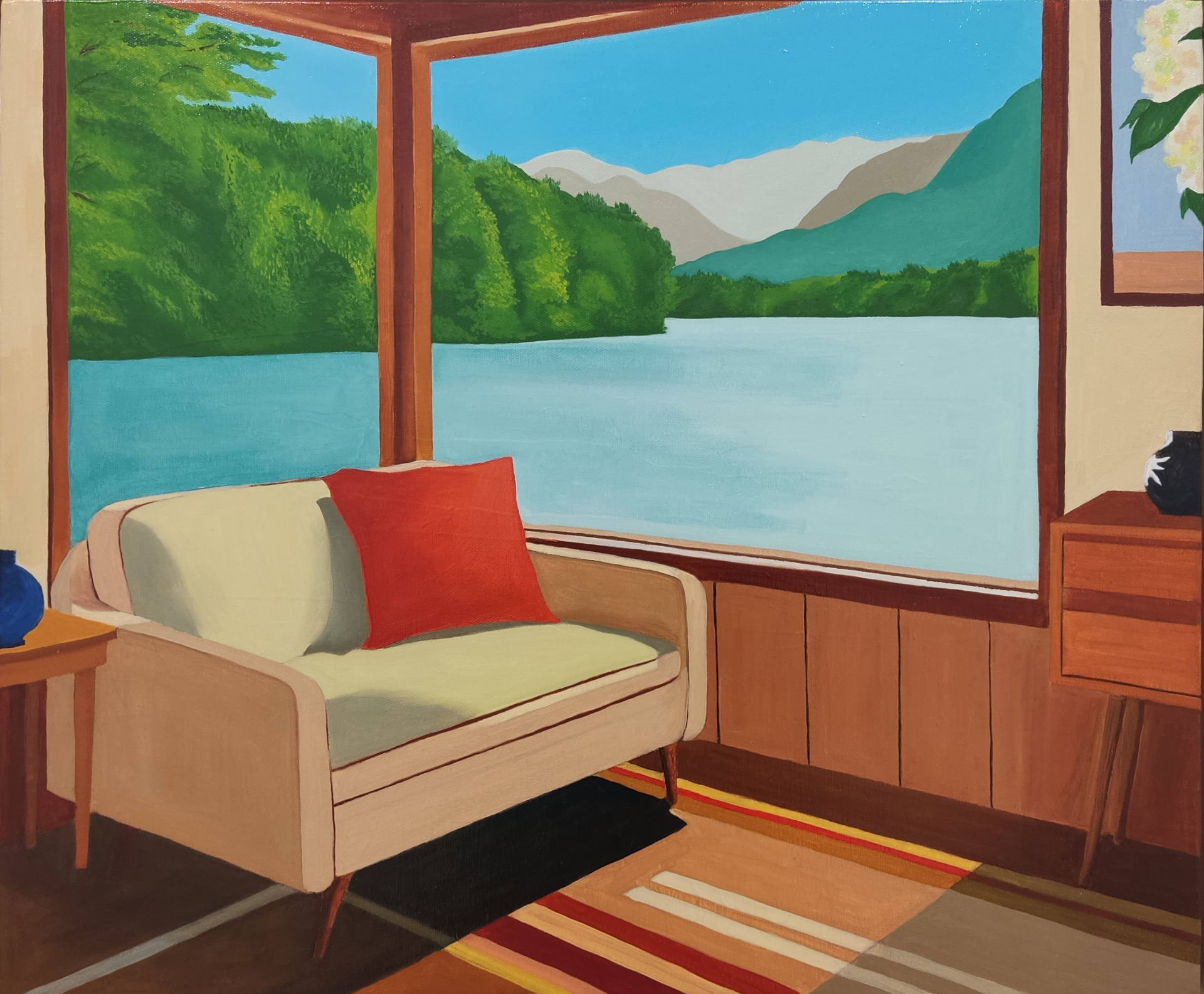
Fenêtre sur lac V8 – Oil Painting on Linen, 65 x 54 cm, 2024
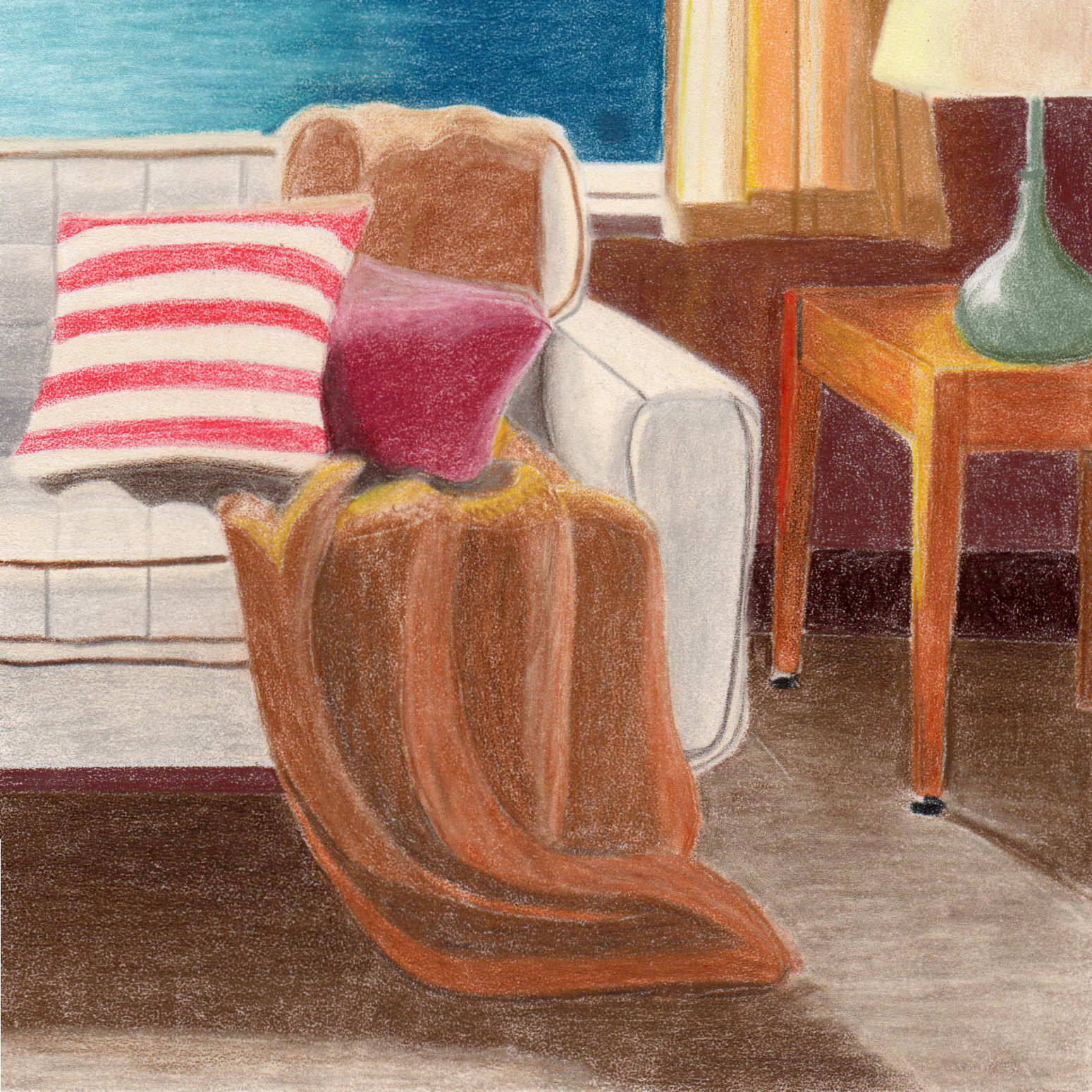
Fenêtre sur lac V7 – Oil Pencils and Pastel on archival paper, 20 x 20 cm, 2024
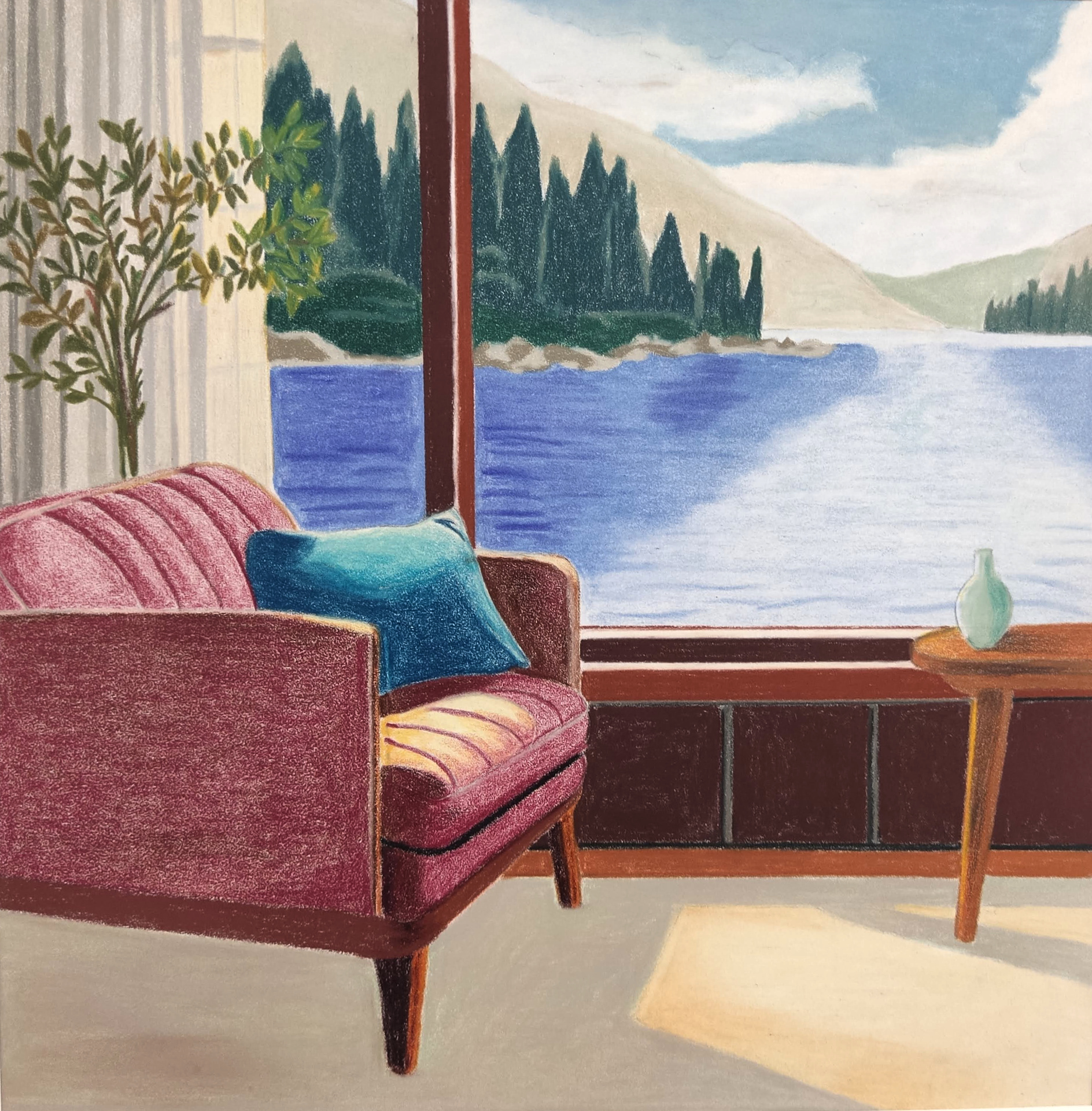
Fenêtre sur lac V5 – Oil Pencils and Pastel on archival paper, 30 x 30 cm, 2024 – Private Collection
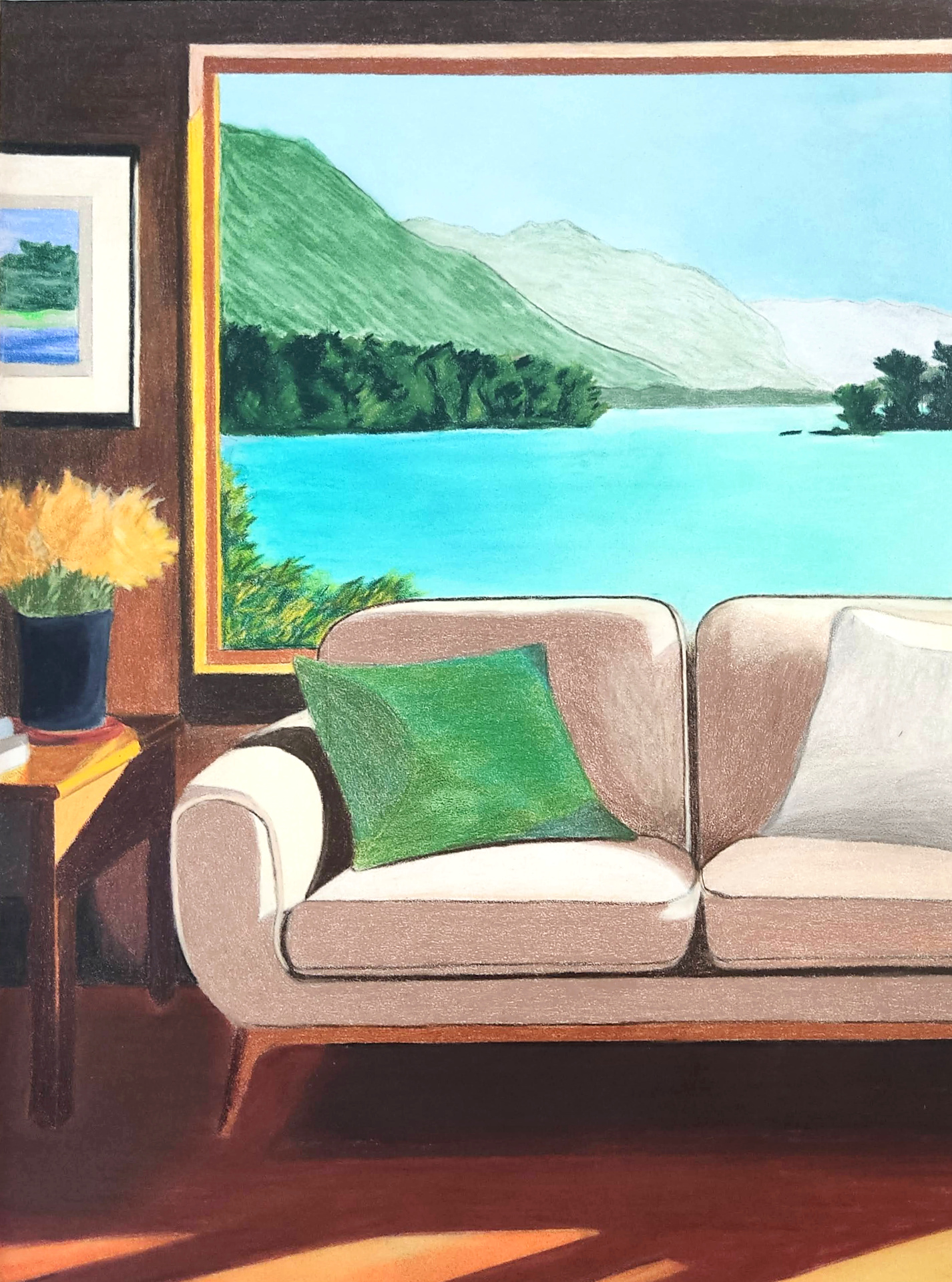
Fenêtre sur lac V6 – Oil Pencils and Pastel on archival paper, 40 x 30 cm, 2024
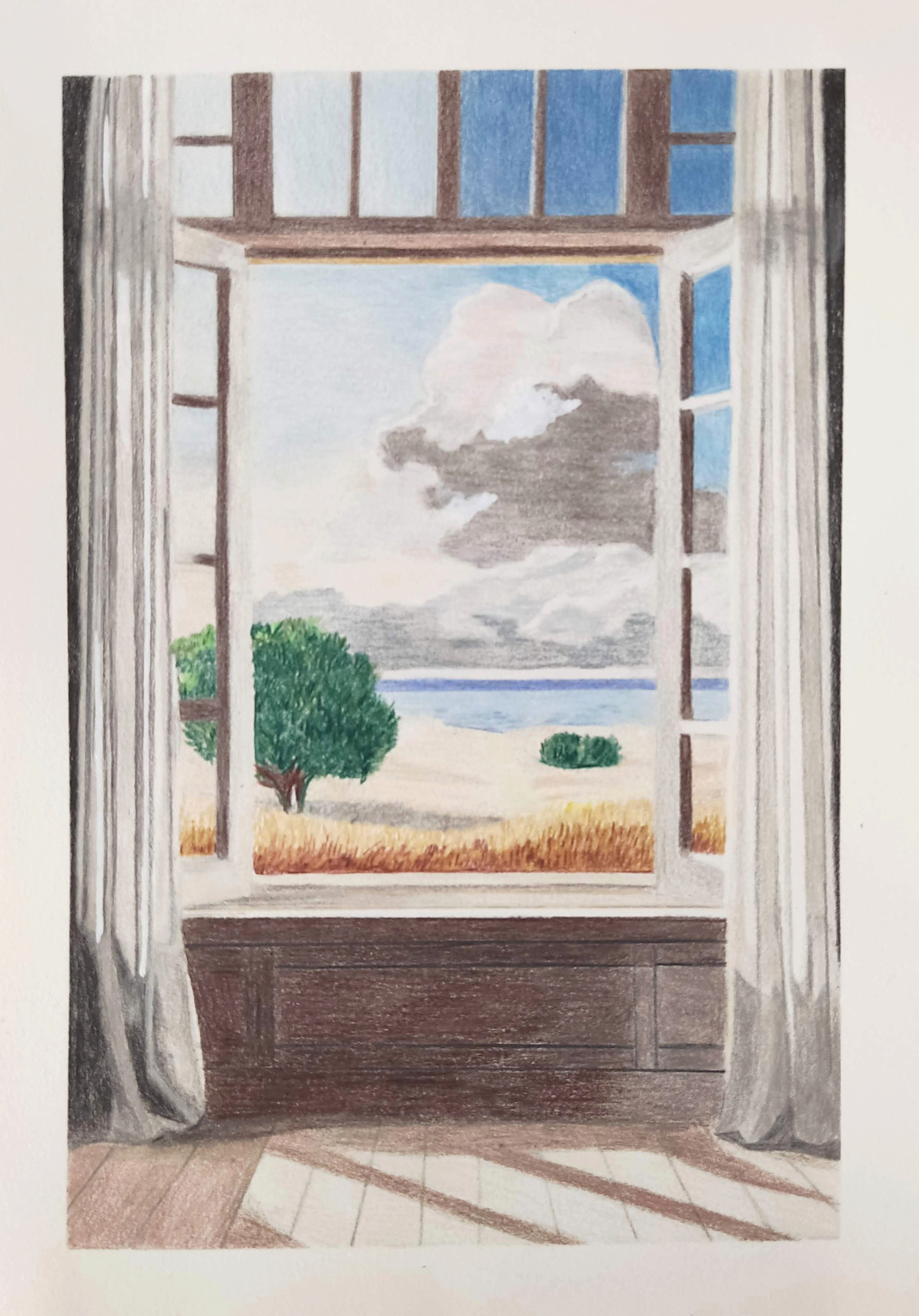
Fenêtre sur paysage – Oil Pencils on archival paper, 29,7 x 21 cm, 2024
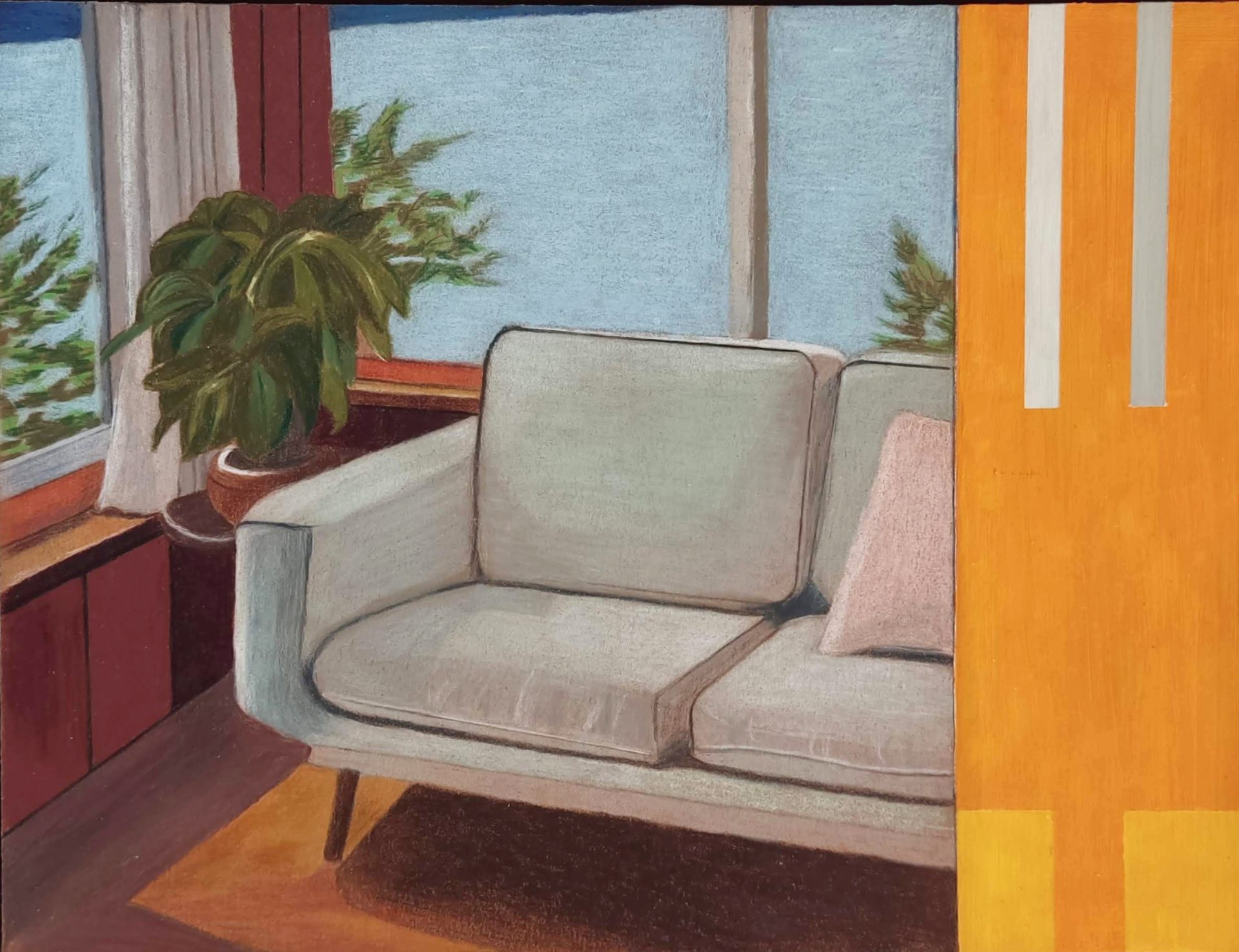
Vue sur lac – Oil Painting and Oil pencils on archival board, 26 x 20 cm, 2023 – Private collection
The Interior with Window series is part of an exploration of domestic space as both a mental and physical construction. By drawing on the iconography of modernist interiors—often associated with the legacy of Edward Hopper—the artist does not engage in quotation, but rather in an investigation of emptiness and the threshold.
The interiors depicted are devoid of human figures, yet saturated with signs of presence. The furniture, arranged with an almost scenographic rigor, functions as a trace: that of an absence, of a suspended use. This absence does not point to a dramatic disappearance, but to a state of withdrawal and latency. It establishes an extended temporality in which the viewer is invited to mentally occupy the space left vacant.
The window constitutes the central device of the series. It operates as a threshold in the theoretical sense of the term: not a boundary, but a zone of passage and projection. Fully transparent, without reflection or resistance, it dissolves the traditional separation between interior and exterior. The landscape is not presented as a framed view, but as a spatial continuity, almost immersive. The interior appears to extend outward, while the landscape, in turn, acts as a psychic extension of the inhabited space.
In the artist’s work, the exterior landscape thus becomes a projection of the interior state of the space itself: calm, stable, and silent. Mountains, water, and vegetation are not descriptive elements; they belong to an idealized, almost archetypal construction that reinforces their mental dimension.
The painterly treatment heightens this sense of suspension. Forms are simplified, colors carefully controlled, and the light remains uniform, without an identifiable source. Time appears frozen, emptied of narrative, giving way to a contemplative experience. This refusal of event situates the works within an aesthetic of restraint, where emotion emerges from stability rather than tension.
Find other series of works HERE

